
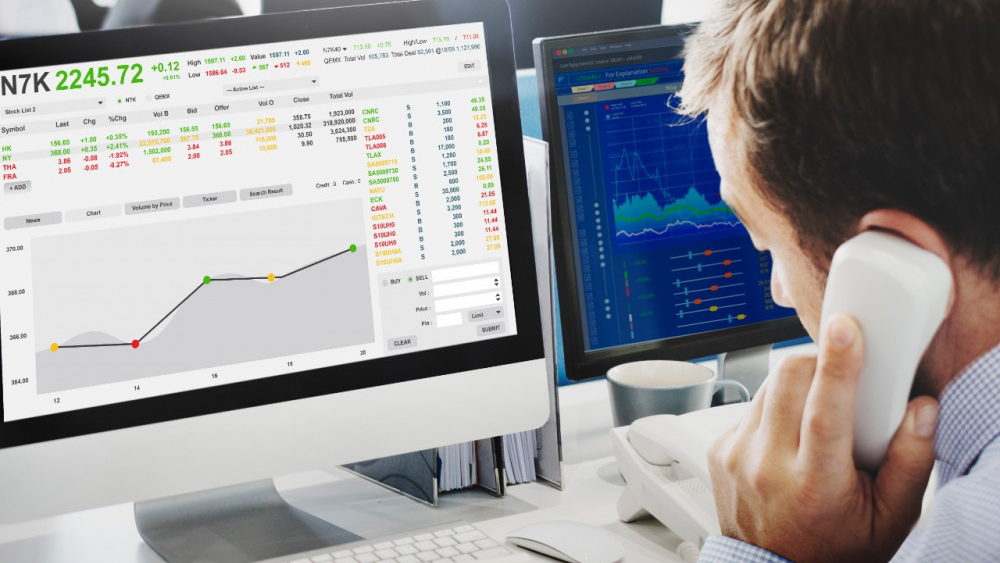
Exchange trading is regarded as an alternative source of stable income, stable financial position and financial well-being. A well-built trading policy of a trader is a way to make good money.
There are many different options for online income. For example, gaming slots in online casinos and sports betting. Random income captures, arouses interest and excitement among many. But these are mostly people who love risk.
As for trading on financial exchanges, this is building your own earning strategy. Investor transactions are associated with risk, but they are carefully thought out, predicted and calculated. There is no place for gambling in trading.
The terms "trading" and "investing" are often used interchangeably, but they are two different types of trading.
Trading or investing: what's the difference?
Trading and investing is, in any case, access to financial exchanges. But both directions have their differences and the specifics of the approach.
Investing implies the safety of an asset for quite a long time, while there is a risk of loss in value. Investment is an investment with a long-term perspective, which implies a profit in the future.
Trading is transactions carried out on current price changes. Positions are opened and closed within short periods of time, much more often than when investing. At the same time, the amount of profit is small, but the frequency of its receipt for individual positions is higher.
In other words, trading is transactions with assets: stocks, currencies, goods, carried out over a short period of time. The goal is to generate short-term but frequent and higher income.
Traders can earn on price fluctuations both in one direction and in the other. If the price is predicted to rise, a buy position is opened. And vice versa: if the price is predicted to fall, the asset is sold.
The technique of selling when prices fall is called a short trade. Specially developed trading schemes are applied:
- scalping;
- day trading;
- swing trading;
- trend trading;
- position trading.
Derivatives trading, such as CFDs or options, has been widely used recently. When trading derivatives, the underlying asset does not fall into the trader's personal use, but credit leverage is provided.
Leverage implies making a certain deposit amount (margin). This can significantly increase the trader's profit, but if the price turns in the other direction, the risk of losses also increases and depends on the leverage of the loan.
Risk forecasting and risk management are the basics of trading, therefore, even before opening the first position, it is necessary to perform a price movement forecast, choose the right trading strategy and action plan. You need to understand the basics of fundamental and technical analysis in order to profitably trade on existing trading floors.